Use loyalty tiers
Loyalty tiers allow you to create tiered loyalty campaigns for customers based on point thresholds they reach.
Customers automatically move to the next tier when they reach the minimum point threshold for that tier. The maximum point value for a tier is one point less than the minimum point value of the next tier. The highest tier has no upper limit on points.
Loyalty tier calculation considers only the active points balance. Negative points do not affect a customer's tier.
Subledgers inherit all the tiers.
For example, consider the following tiers:
- Bronze: 100 to 199 points.
- Silver: 200 to 299 points.
- Gold: 300 points and above.
A customer is in the Bronze tier if they have at least 100 points but fewer than 200. When they reach 200 points, they automatically enter the Silver tier. When they reach 300 points, they move up to the Gold tier.
To add customers to a default tier with a zero-point balance, we recommend
creating a tier
with the Point threshold set to 0. If the tiers in the loyalty program
expire
relative to the tier join date,
however, customers must earn at least one active point for the startDate and
expiryDate properties to be created for their current tier in the Integration
API.
Customers can enter higher tiers as soon as they earn enough points, and can be downgraded to a lower tier immediately or following a schedule. You can choose when and how customers are downgraded when creating a loyalty program or at any time until there are point transactions in the program.
Immediate tier downgrade
With immediate downgrade, each customer is downgraded to a tier that matches their current balance as soon as they don't have enough points to remain in their current tier.
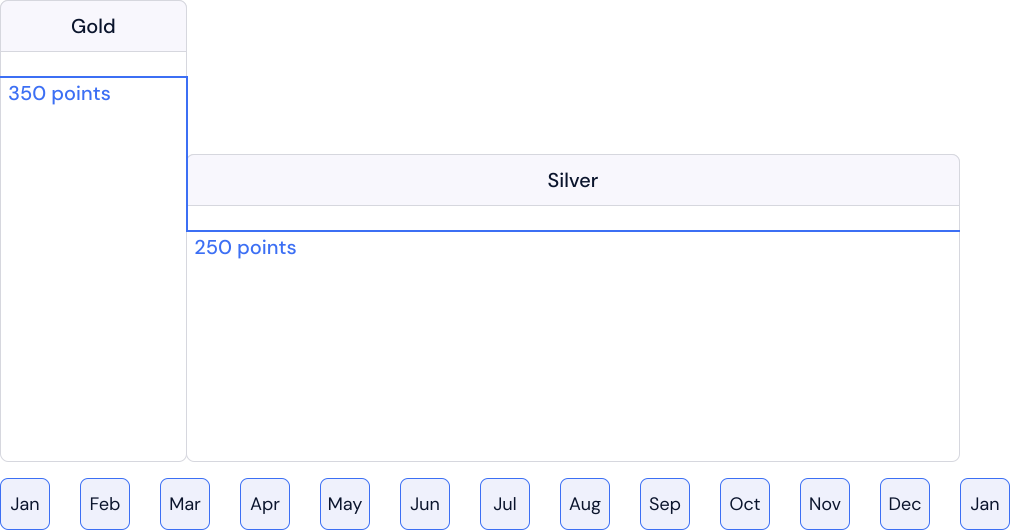
Let's imagine a loyalty program with three tiers: Bronze, Silver, and Gold. The downgrade type is immediate.
A customer joins the loyalty program on January 1, 2024, and enters the Gold tier with 350 points. On March 10, the customer spends 100 points and is immediately downgraded to the Silver tier.
Immediate downgrades do not trigger tier downgrade notifications.
Scheduled tier downgrade
With scheduled downgrade, you can define how long a customer can remain in their current tier before the tier is reevaluated, and you can select the downgrade method.
Expiration type
The expiration settings define when a customer's tier status is reevaluated.
Tiers in your loyalty program can be reevaluated:
If points and tiers are configured to expire at the same time, points expire first. This ensures the tier reevaluation is based on the updated active points balance.
Choosing the right expiration type depends on your loyalty program's goals and structure. Expiration relative to the program join date offers predictability, while expiration relative to the tier join date encourages continuous engagement. On the other hand, an absolute expiration date simplifies the tier management process and is great for loyalty programs that align with business cycles or major promotional periods.
Expiration relative to program join date
With this expiration type, each tier is reevaluated relative to when the customer joined the loyalty program. The expiration date remains tied to the customer's program join date, regardless of any changes in the tier level.
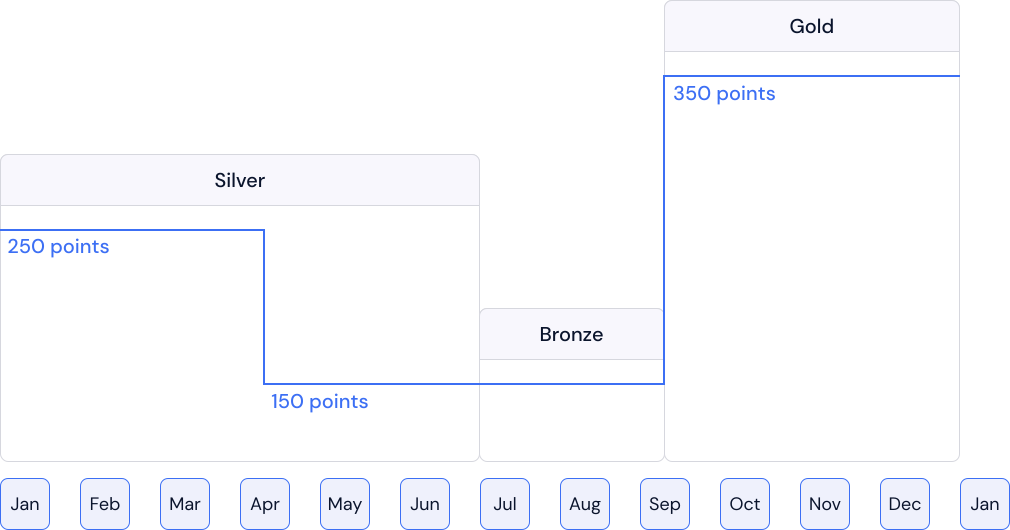
Let's imagine a loyalty program with three tiers: Bronze, Silver, and Gold. Tier expiration is relative to the program join date and resets every six months.
A customer joins the loyalty program on January 1, 2024, entering the Silver tier with 250 points immediately upon joining. Although the customer spends 100 points in April, they are downgraded to the Bronze tier on July 1, six months after their program join date. Later, in September, the customer makes another purchase and immediately is upgraded to the Gold tier with 350 points. Despite this upgrade, the reevaluation of their current tier remains tied to their loyalty program join date, meaning their Gold tier status is reevaluated on January 1, 2025.
Expiration relative to tier join date
With this expiration type, each tier is reevaluated relative to when the customer entered the tier. The expiration period starts from the date the customer upgrades to another tier, extending their tier status based on this new start.
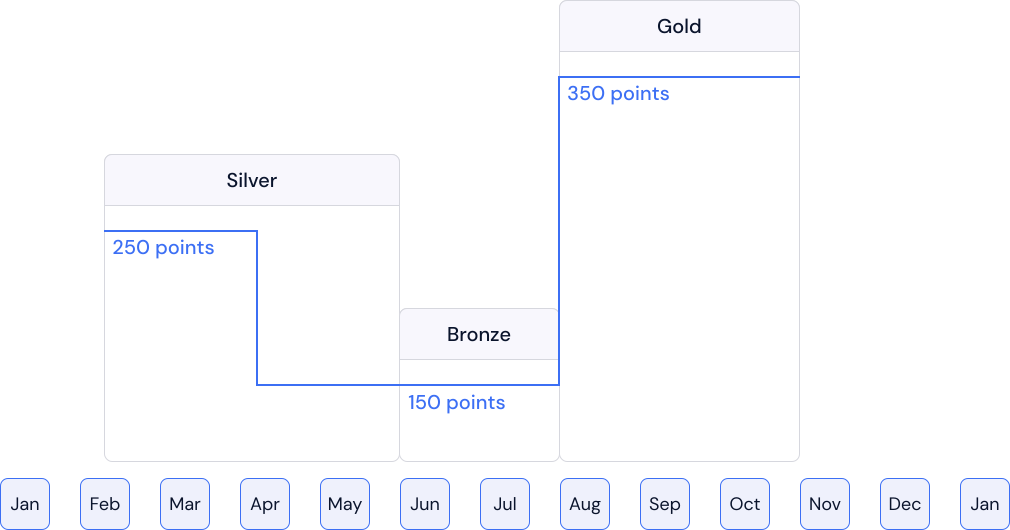
Let's imagine a loyalty program with three tiers: Bronze, Silver, and Gold. Tier expiration is relative to the tier join date and resets every three months, on the last day of the month.
A customer joins the loyalty program on January 1, 2024, and enters the Silver tier with 250 points on February 15. Although the customer spends 100 points in April, they are downgraded to the Bronze tier on May 31 - three months after their tier join date, on the last day of the month. Two months later, on July 31, the customer makes another purchase and immediately moves up to the Gold tier with 350 points. The reevaluation period of the Bronze tier is now discarded, and the customer's Gold tier status is reevaluated on October 31, three months after their latest tier join date.
Absolute expiration date
This expiration type sets a fixed tier reevaluation date for all customers within the loyalty program, regardless of when they joined or moved between tiers. The reevaluation date is relative to the tier cycle start date.
Let's imagine a loyalty program with three tiers: Bronze, Silver, and Gold. Tiers are reevaluated yearly on January 1.
Customer 1 joins the loyalty program in March, 2024 and immediately enters the Gold tier with 350 points. Soon after, they spend nearly all of their loyalty points and earn no points before the end of the year.
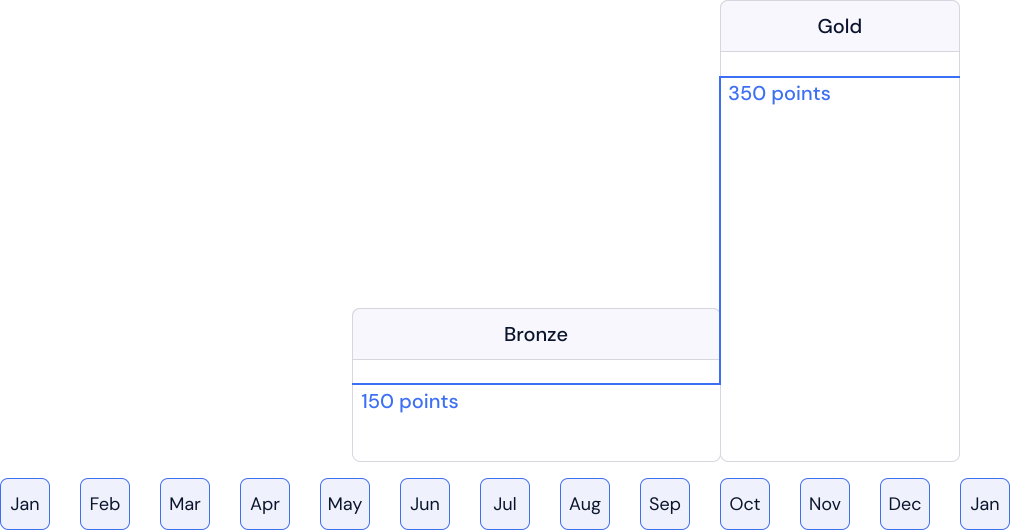
Customer 2 also joins the loyalty program in March, but enters the Bronze tier in May. Before the end of the year, they move up to the Gold tier with 350 points.
Both customers remain in the Gold tier until January 1, 2025, when their tier is reevaluated.
Downgrade method
The downgrade method defines how a customer's tier status is downgraded after reevaluation.
If the customer doesn't have enough points to remain in their current tier, they can be downgraded in one of the following ways:
Match current balance
With this downgrade method, the customer enters the tier that matches the number of active points in their point balance after their current tier is reevaluated.
For example, a customer enters the Gold tier with 350 points. They immediately redeem 200 points and now have 150 points left.
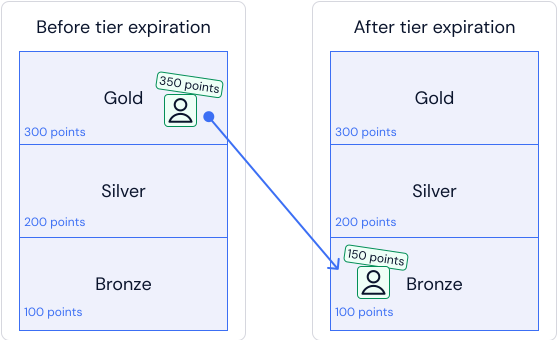
The Gold tier has a point threshold of 300 points, so the customer is downgraded to the Bronze tier after the Gold tier is reevaluated.
Go down one tier
With this downgrade method, the customer enters the tier below their current tier after the tier is reevaluated and the customer doesn't have enough points to remain in it.
For example, a customer enters the Gold tier with 350 points. They immediately redeem 200 points and now have 150 points left.
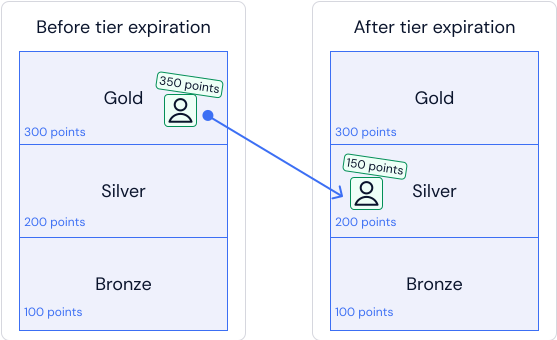
The Gold tier has a point threshold of 300 points, so the customer is downgraded to the Silver tier after the Gold tier is reevaluated.
If the customer does not have enough points for the lowest tier's minimum requirement, they are removed from all tiers, and no current tier is assigned to them.
Tier reevaluation
A tier reevaluation can happen automatically or on a scheduled tier expiry date defined in the expiration settings.
- Tier upgrades: Customers are automatically upgraded to a higher tier after they reach the required active point balance. This occurs immediately after newly added points or pending points become active.
- Tier downgrades: If a customer does not meet the point requirements for
their current tier at the time of reevaluation, their tier status is
downgraded.
- Immediate downgrade: Tiers are reevaluated automatically when points are deducted.
- Scheduled downgrade: Tiers are reevaluated only on the scheduled expiry date. If a point deduction occurs before this date and the customer no longer meets the tier requirements, they remain in their current tier until the scheduled reevaluation date.
- No change in tier: If a customer meets the point requirements for their current tier at the time of reevaluation, their tier status remains unchanged.
Examples: Tier reevaluation timing
For all the examples mentioned in this table, let's assume that the
customer's tier reevaluation cycle starts on 12 October 2025,
07:20:50.
For tier reevaluation, time is calculated as follows:
- 1 week = 7 days
- 1 month = 30 days
- 1 year = 365 days
| Time after cycle start | Reevaluation occurs on |
|---|---|
|
|
|
|
|
|
|
|
|
|
|
|
|
|
|
|
You can also configure notifications to inform your customers of tier-related changes. These notifications can only be set up for profile-based loyalty programs with scheduled tier downgrade and a relative expiration date.
Tier boostClosed beta
A tier boost moves the customer into a higher loyalty tier for a specified period, without changing their points balance. You can configure a tier boost using the Boost tier effect in the Rule Builder.
A tier boost temporarily overrides the customer's points-based tier. It doesn't add or remove points, or affect how the points-based tier is calculated. Canceling the session that triggered a tier boost rolls it back, and the customer reverts to their points-based tier.
When you import customers into loyalty tiers, it voids all their active tier boosts in that loyalty program. Use this endpoint to revert a tier boost that was applied incorrectly.
Tier change notifications are sent when a customer's current tier changes because of a tier boost starting, expiring, or being rolled back.
Tier boosts are only available for loyalty programs that use scheduled tier downgrade.
Tier selection
While a tier boost is active, Talon.One compares it with the customer's points-based tier and applies the higher of the two:
- If the points-based tier is higher than the tier boost, the points-based tier applies. A tier boost sets the base for the customer's tier, that is, their points balance can promote them above the boost but not below it.
- If the tier boost is higher than the points-based tier, the tier boost applies.
- If both tiers are at the same level, the tier boost applies. This tells you whether the customer's current tier comes from their points balance or from a tier boost.
If you trigger more than one tier boost for the same customer, the most recently triggered tier boost applies, replacing any previously active boost and its expiry date.
Tier boost expiry
Each tier boost has its own expiry date, calculated based on your settings in the Boost tier effect. When a tier boost expires, the customer's tier automatically reverts to their points-based tier. The tier boost expiry does not add or deduct any points.