Grocery
Talon.One fits seamlessly into the grocery ecosystem where promotions drive traffic and cart size. It empowers grocery retailers to run loyalty programs, personalized promotions, and supplier-funded campaigns across web, app, and point-of-sale channels. This works even with catalogs of 100,000+ items and hundreds of active promotions running at once.
This page outlines integration approaches and use cases tailored to grocery retail scenarios ranging from full-service supermarkets to convenience stores and online grocery platforms.
Use cases
Loyalty programs
Tiered points
Create a loyalty program with tiers that reset each month. The reward reflects that month's spend rather than historical loyalty. This creates a recurring incentive to reach the next threshold instead of rewarding spend that would have happened anyway. Configure an absolute expiration date so tiers reevaluate monthly. Use the match current balance downgrade method so each tier reflects only that month's spend.
For example, a grocery retailer sets three monthly spend thresholds: €100, €250, and €500. Reaching a threshold in one month unlocks a 3%, 5%, or 10% bonus, respectively, on the customer's spend the following month. Each month resets, so customers need to reach the threshold again to keep earning the bonus.
Cashback to loyalty card
Use a card-based loyalty program to let customers collect and spend points on a loyalty card. Award points that represent a percentage of a customer's spend as cashback that customers can spend directly at a point of sale (POS) system.
For example, a grocery retailer awards points equal to 2% of a customer's spend to their loyalty card after each purchase. The customer redeems the balance directly at checkout on their next visit.
Gamification
Purchase streak missions
Set up achievements for your campaigns to run short time-limited missions that encourage repeat visits. This works well for convenience stores since customers already visit multiple times a week.
For example, a five-day purchase streak awards bonus points that increase with each consecutive day. It ends with a coupon for a free item.
Promotions
Mass and gated promotions
Mass promotions discount anchor products like milk or eggs for any customer with no sign-in required. Use cart item catalogs to tag products by category so the discount applies automatically. For example, a weekly leaflet promotion discounts dairy products for all shoppers.
Gated promotions unlock broader discounts once a customer joins the loyalty program. Use a coupon to gate the offer behind sign-up. For example, a €5 welcome coupon is reserved for customers who register in the app.
Member pricing
Use price types to target specific audiences by displaying a personalized price on a product listing before checkout. This lets an online grocery retailer show member-only pricing without requiring the customer to complete a transaction first.
For example, a loyalty member browsing a delivery app sees a discounted member price on a product listing while a non-member sees the standard price.
Referrals
Referral bonuses
Every customer gets a unique referral code they can share with friends. Once redeemed, Talon.One links the advocate and friend. This awards a separate bonus to each.
For example, an online grocery retailer grants the advocate 50 loyalty points after a friend's first completed order. The friend receives a coupon for €10 off their first order in return.
To manage spend, some grocery retailers cap the total referral budget at €50 per advocate. The advocate's fourth successful referral then earns a different bonus. This encourages the advocate to keep referring even after reaching the €50 cap.
Store-based offers
Franchise-level campaigns
Set budgets at the store level so that franchisees in individual locations can run their own offers without affecting the group's overall spend.
For example, a franchise network runs a national promotion that gives every customer double loyalty points on breakfast items like eggs, milk, and coffee before 10 a.m. Individual franchisees can still add their own store-specific offers within their own store budget.
Supplier-funded campaigns
CPG-funded placement
Consumer Packaged Goods (CPG) suppliers (such as beverage or snack brands) often help pay for a campaign in return for better shelf placement or advertising. Use custom effects to track how much each supplier contributes. Export this data from campaign insights and share it with the supplier as a report.
For example, a grocery chain runs a promotion funded by a beverage supplier in return for higher shelf placement. The grocery chain also sends the supplier a report showing how the promotion affected sales.
API endpoints
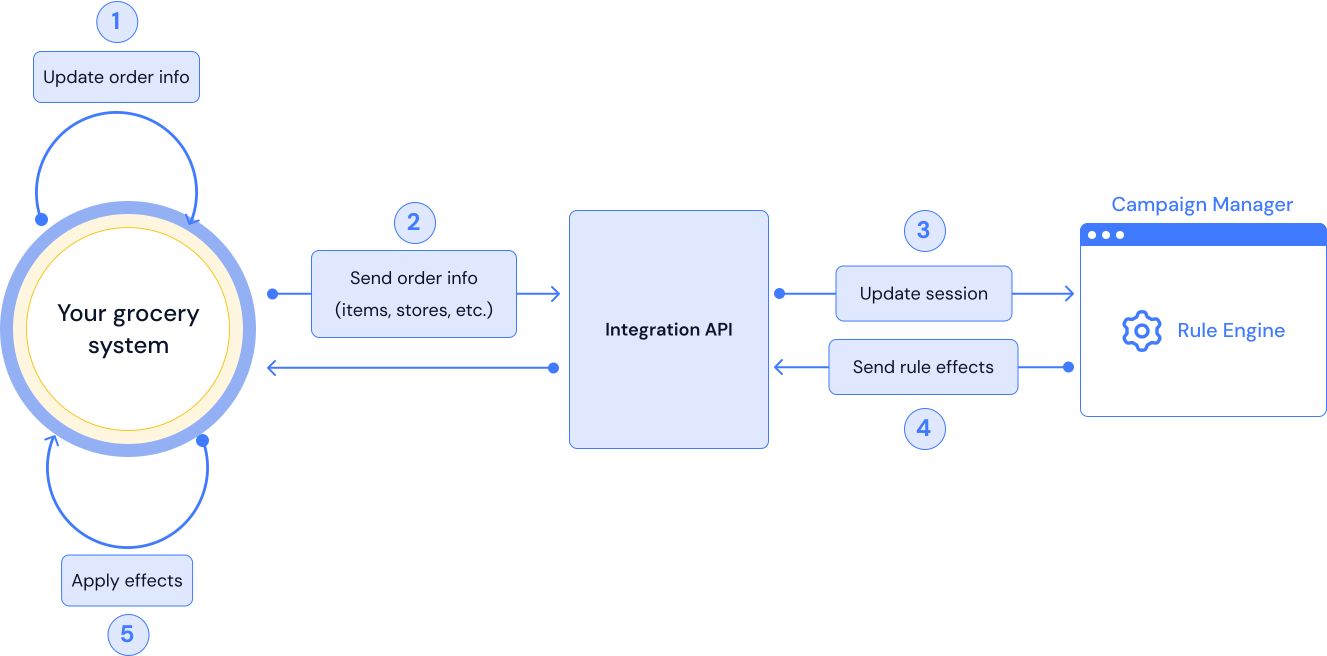
The Integration API is the primary API for real-time interaction with Talon.One.
The endpoints you work with depend on your use case. These are generally the most relevant endpoints for grocery integrations:
| Endpoint | Description |
|---|---|
| Update customer session | Update the customer session with the latest data when the customer completes a purchase. |
| Update customer profile | Set custom attributes, for example, category spend or dietary preference, for a customer profile. You can also use this endpoint to modify the audience in which the customer is a member. |
| Track advanced event | Trigger custom events on real-time customer actions, for example loyalty program sign-up or app registration. |
| Create coupon reservation | Create coupon codes for the customer profile, for example as a loyalty sign-up or referral bonus. |
Concepts
Here's an explanation of some specific Talon.One concepts that are relevant for grocery use cases:
| Concept | Description |
|---|---|
| Customer session | A customer's cart. For example, a shopper building an order in your app. |
| Event | A single occurrence of a customer action, for example, joining a loyalty program or redeeming a coupon. |
| Cart items | Products added to an order, for example, milk, eggs, or bread. Each item can include attributes like category or SKU. |
| Custom attributes | Product-specific or order metadata. For example, category or dietaryPreference. |